
Wiri is at the forefront of a groundbreaking $9 million research initiative designed to redefine the future of industrial zones in Aotearoa New Zealand. The Future Urban Industry (FUI) project is using Wiri as a case study to explore how our industrial zones can thrive in an increasingly uncertain world.
Since the project began, Wiri Business has helped the project team approach local businesses to help with monitoring activities within buildings. WiriLink recently joined the team in the field and accompanied Dr Ariel-Micaiah Heswall, a Research Fellow in sensory and urban ecology at the University of Auckland School of Biological Sciences, to find out what data they are capturing in Wiri.
Seeing Wiri through a bird’s eyes
Ariel is a research fellow in the FUI ecology team, investigating the ecological side of industrial zones.
“I focus particularly on light pollution, but also other forms such as noise pollution, which have a strong sensory element. I’m really interested in the sensory environment and how birds and other species experience it. Whether it’s light or sound, I want to understand the threat from the bird’s perspective: how they receive those sensory signals, and how they respond and adapt.”
To answer it, she is gathering three kinds of data. The first is light: overall intensity, plus the colour of light sources such as streetlights. A handheld device reveals the true colour and spectral peaks of a light, even one that looks plain white. The second is sound, recording ambient noise for both pitch and intensity. The third is bird surveys, logging which species are present.
Five minutes, 360 degrees
The monitoring covers three zones, with around eight sampling stations in each. Sites reach deep into the industrial area, from public walkways outside factories such as the Eta plant to the Mobil station where Wiri joins Manukau City. Green spaces including Wiri Mountain, Hayman Park and Puhinui Reserve are surveyed too, along with residential streets.
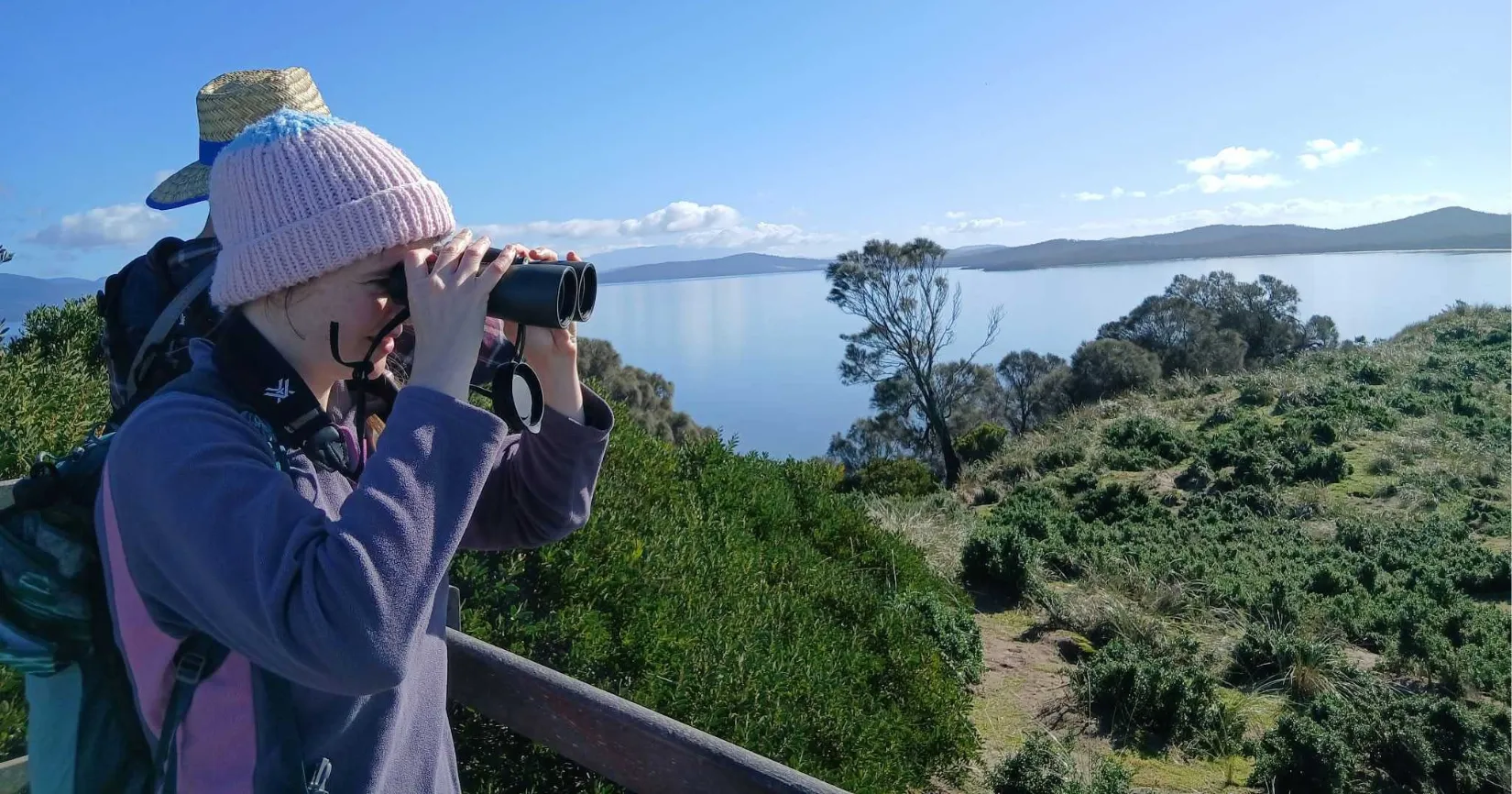
Bird counts follow Department of Conservation guidelines. At each station, Ariel spends five minutes recording every bird she sees or hears within roughly 200 metres, turning a full 360 degrees. A survey day starts early in the morning and wraps up in the early afternoon.
Surveys will run seasonally, three to four times a year, for at least the next two years. That should reveal seasonal shifts, such as a spring spike or more fantails in the cooler months.
Early surprises
The winter surveys are only a snapshot, but they already show real variety.
“In the reserve, we see a good number of gold finches which you’d expect to see in farmland. We’re seeing a high number of pīwakawaka (fantails) and starlings which are common in the industrial areas. There are also shorebirds including native blackback gulls and the pied shag making use of the industrial area and reserves. A good number of native birds seem to be doing well and adapting to urban environments.”
Adaptable species such as mynas, starlings, blackbirds and sparrows are making good use of shrubs and trees planted around buildings.
The biggest surprise came overhead.
“We saw pūtangitangi, the paradise shelduck, flying over Wiri Industrial Zone. The species usually favours clean freshwater, and the sighting suggests Wiri may be an important flight path.”
“In the Puhinui Reserve, a small pond is hosting the New Zealand scaup, our endemic diving duck. BirdsNZ members told me they’ve bred there before and had ducklings, so that’s a great sign.”
Noise data collection has only just begun. Early light readings, however, show less light pollution in the reserve and residential areas than in the industrial zone. A separate project is using sky quality meters across Auckland to compare night-time brightness with levels from 10 years ago.
Building better industrial zones
It’s too early to draw conclusions, but the team’s literature review points to simple changes. Planting native trees supports native insects, which in turn feed insect-eating birds. Reducing light and noise pollution also helps, since both can disrupt birds’ sleep, foraging and breeding success.
“By reducing that overall pollutant, you can support a more resilient population,” Ariel says.
The work is being supported by Auckland Council and BirdsNZ, and engagement with mana whenua is ongoing.
Get involved
Ariel’s biggest wish is for locals to join in. Next time you’re on a work break in Wiri, or relaxing in your backyard, try a five-minute bird count. Note what you see and hear, then log it on the eBird or iNaturalist app. Every sighting adds to the picture of how birds are living alongside industry.
If you want to learn more about the FUI project, visit their website https://www.futureurbanindustry.ac.nz/ or follow their progress on linked in: https://www.linkedin.com/showcase/futureurbanindustry/home